The complete PDF guide
The whole thing, written in plain parent language, with no jargon and no judgement.
Before you accept a label, understand what overload is doing to their brain. And learn the right moment to seek help.

Written by Dra. Ana Paula Pandolfi Custódio, paediatrician in Vila Velha, Brazil.
CRM-ES 7453 · RQE 5319
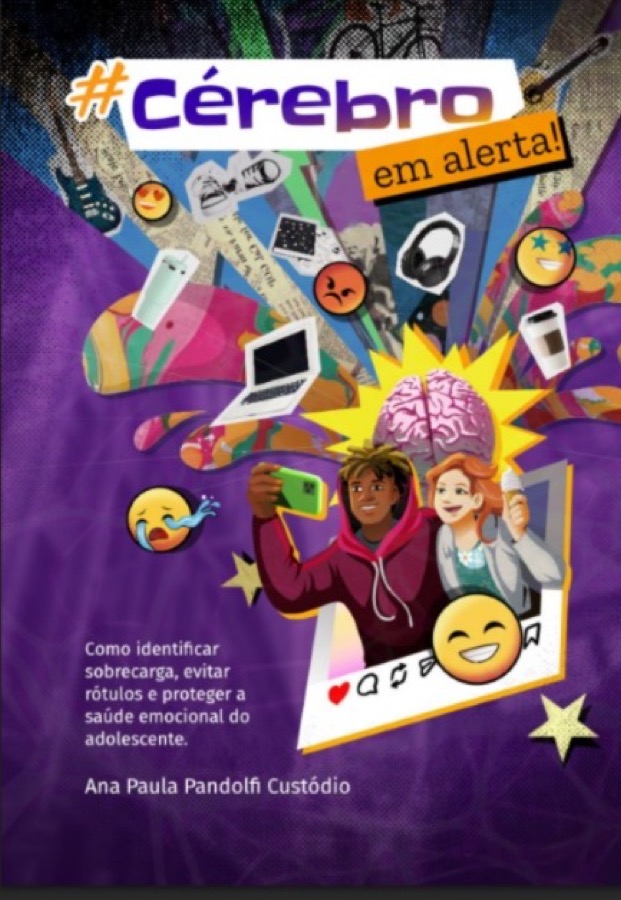
This ebook really resonated with me as a mom. For a while, I wondered if my son might have ADHD because he was easily overstimulated, had difficulty focusing, and had a very irregular bedtime. […] This book gave me a completely different perspective and reminded me to understand what may be behind a behavior before labeling it. Such a valuable resource for parents of teenagers!
Great ebook! Clear, direct and very useful content. It helps parents better understand adolescence and recognise when professional help is needed.
The material brings important reflections and an accessible approach to a subject that deserves more and more attention from families and professionals. Understanding what lies behind certain behaviours, without judgement or labels, is essential for healthier emotional development.
The last two read the Portuguese edition; their words were translated.
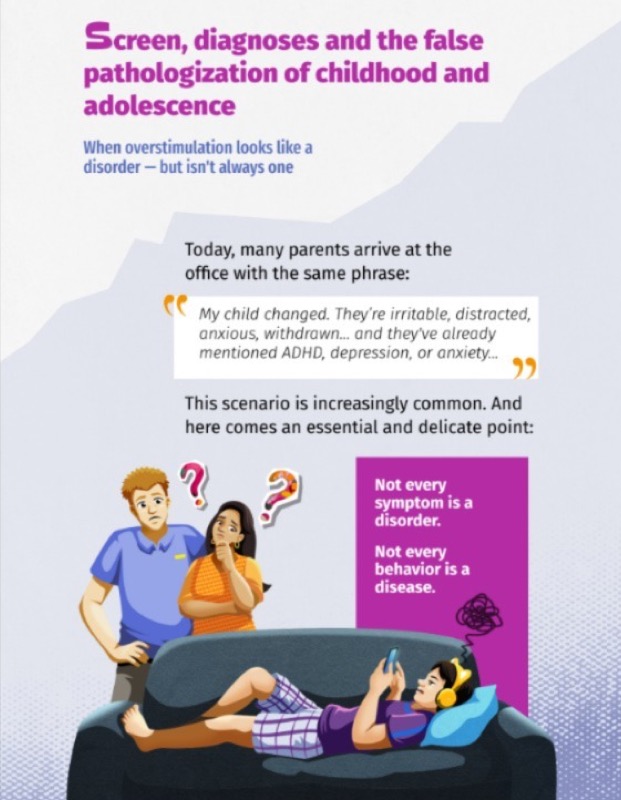
Then comes the rest. A teacher made a comment. Another parent said something. Someone online said it is ADHD. Someone else said it is just laziness, that every teenager is like that.
And you are caught in the middle, afraid of both things at once: afraid it is serious and you are too slow, and afraid of putting a heavy name on what might be tiredness, bad sleep and too much stimulation.
Not every symptom is a disorder. Not every behaviour is a disease. But working that out alone, in the middle of the scare, is almost impossible.
When the name arrives too early, it sticks. It becomes a tag at school, an explanation for everything at home, and sometimes medication that was not needed.
When nobody looks, the opposite happens: sleep gets worse, mood drops, the family runs out of energy, and something adjustable turns into long suffering.
There is a path in between, and it starts with something simple: knowing what to observe, for how long, and which sign is the one that truly calls for an assessment.
The whole thing, written in plain parent language, with no jargon and no judgement.
Clear lists to tick at home: the signs that call for professional help, and self care for the carer.
Made by a designer, so you can glance, understand at once and keep them in sight.
Read it on your phone, on your computer, or print it. It is yours, with no expiry date and no subscription.
Less than a pizza, and it is yours to keep.
one-time payment · instant access
Get the guide nowSecure checkout on Kiwify
7 day guarantee. Read it and it was not what you expected? Ask for a refund within seven days and get your money back, no explanation needed.
I will not promise that your child goes back to who they were in two weeks. That is not how it works, and anyone promising that is selling you something else.
What I promise is that you will stop deciding in the dark. You will know what to look at, what to write down, and when to book the appointment.
You have two options now. The first is to keep looking for answers in parent groups and social media videos. The second is to spend one afternoon reading this and come out with criteria.
Option one is cheaper today. It is just not cheaper a year from now.
Dra. Ana Paula Pandolfi Custódio
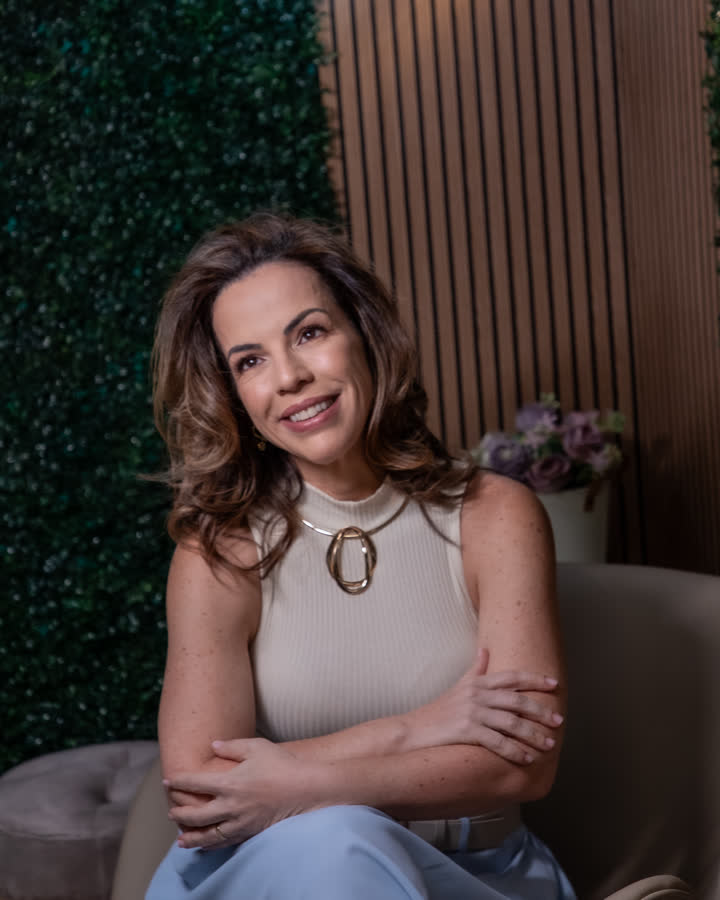
Paediatrician focused on teenagers
CRM-ES 7453 · RQE 5319 (Pediatria) · RQE 13316 (Neonatologia)
For years I have cared for children, teenagers and families at a stage of life when everything changes at once: the body, the emotions, behaviour, relationships and the way of thinking.
I am a paediatrician, a postgraduate lecturer, a speaker, and a student of the connections between brain development, behaviour and health.
At the clinic I hear, every day, parents trying to understand what is happening to their children. And teenagers trying to understand what is happening inside them.
Brain on Alert was born from those stories, those doubts and those conversations. Because some questions are too big to fit into the last minutes of an appointment.
At the clinic, I care for teenagers. In this ebook, I want to help parents truly see them.
Less than a pizza, and it is yours to keep.
one-time payment · instant access
Get the guide nowSecure checkout on Kiwify
7 day guarantee. Read it and it was not what you expected? Ask for a refund within seven days and get your money back, no explanation needed.
The button takes you to Kiwify, the platform where the purchase is made securely. As soon as payment is approved, access is released by email and in your Kiwify account, and you can read or download the PDF. It is not a file sent by message. If it does not arrive within a few minutes, check your spam folder and the email address you typed at checkout.
Yes. The checkout is Brazilian and shows the price in reais, which is roughly the cost of a couple of coffees. On the payment screen you can change the country and pay with an international card. Boleto and Pix only work inside Brazil.
Yes. The guide helps you observe, follow and talk better with whoever is already treating them. What it does not do is replace treatment or change medical decisions.
No. It is against naming without assessing. When a disorder is there, the sooner the right assessment happens, the better. The guide exists to get you to that moment with information instead of guesswork.
It was written with teenagers in mind, and it also works for a pre teen whose routine, sleep and mood have started to change.
You have seven days to ask for a refund inside Kiwify, and the money goes back to you.